

Updated: 08-18-2023
In the first year, students will complete a core curriculum that includes the courses outlined below.
2023 - 2024 Academic Year
Quarter I: August 21, 2023-August 25, 2023
Essential Principles of Pharmacology
- One week introduction to all Pharmacology courses.
Dr. Charles Inturrisi, Director
Quarter 1: August 28, 2023-October 13, 2023
Principles of Pharmacology I: Chemical Biology
Chemical biology is a diverse and evolving field involving chemical approaches to studying and manipulating biological systems. In this course, students will develop an understanding of chemical reactions used in the synthesis and biosynthesis of small molecules and macromolecules, and of the chemical principles that underlie enzyme function and receptor pharmacology. These topics are at the core of modern molecular pharmacology and are essential to understanding how drugs are currently developed in the pharmaceutical industry. At the end of the course, students give an oral presentation on a current topic in chemical biology of their choosing.
Dr. Minkui Luo, Director, Dr. Heeseon An, Co-Director
Quarter 1: September 5, 2023- December 7, 2023
Fundamental Principles and Methods of Neurobiology and Pharmacology (FPM)
This multidisciplinary course combines lectures about the fundamental biochemical, cellular, molecular, immunological, genetic, and bioinformatics approaches that are used in biomedical research with critical discussion of research papers. In addition to lectures, each meeting will have provisions for a discussion period. Generally, the discussion period will be used to discuss an original research paper, but occasionally it will be used for a model building laboratory, or a review session. The development of a research proposal is a major component of the course. The course is open to all students and fellows and it is a core course for both neuroscience and pharmacology. (students can be exempted from this course if they pass the exam given at the beginning of the course. If they are exempted, they would then take Methods in Pharmacology instead as a requirement.)
Dr. Josef Anrather (Neuroscience), Director, Dr. Michael Kharas, Course Co-Director
Dates: Available on the Syllabus
Critical Analysis of the Scientific Literature in Pharmacology
This course focuses on the underlying logic behind the design of scientific experiments. An emphasis is placed on understanding how hypotheses are generated, and how variables, assays, rationales, and model building are utilized in experimental design. Each class focuses on a recent paper in the scientific literature, and uses the paper as a starting point for discussion. Students are expected to propose and justify novel experiments based on the paper and discussion. Students are encouraged to use "Protocols in Molecular Biology," as well as other resources to become familiar with the methodology, advantages, and limitations of the experimental approaches used in the papers. It is expected that students will have to read background papers for each of the papers discussed in class.
Dr. Samie Jaffrey and Dr. Steven Gross, Co-Directors
Quarter I - II:
2023 Dates: Thursday, September 7th, Thursday, October 5th, Wednesday, October 25th, Tuesday, November 14th
Tri-Institutional Responsible Conduct of Research Course (RCR) - MSKCC
The responsible conduct of research is the practice of scientific investigation with integrity. Training in this area is an essential component of research training; awareness and application of established professional norms and ethical principles is required in the performance of all activities related to scientific research. Weill Cornell Medical College is committed to fostering an environment that promotes the practice of scientific investigation with integrity. This course is intended to help fulfill that commitment. Course information is available here.
RCR contact: rcr@mskcc.org for more information.
Quarter II: October 16, 2023 - December 6, 2023
Principles of Pharmacology II: Signal Transduction
This is an advanced course on the molecular pharmacology of cellular signal transduction mechanisms. The course will provide students with a fundamental understanding of the recurring themes that have evolved to enable cell-cell communication - lectures cover all major mammalian signaling pathways. An emphasis is placed on the use of pharmacologic and chemical tools to study problems in signal transduction and on structural insights into signaling mechanisms that have been gained by the application of X-ray, NMR, and computational approaches. Major topics to be covered include: (1) Signaling through G-protein coupled receptors; (2) Heterotrimeric and monomeric G proteins; (3) Signaling through enzyme-linked receptors; (4) Receptors with tyrosine kinase activity; (5) Signaling via ion channels; (6) Lipid-mediated cell signaling; (7) Signaling via reactive molecules/redox; and (8) Signaling through nuclear receptors. The course is intended to expose students to the most current progress in the field of cell signaling. Upon completion, it is expected that students will comprehend and appreciate the merits of journal articles that report the latest findings in signal transduction research.
Dr. Steven Gross and Dr. Samie Jaffrey, Co-Directors
Quarter III: January 2, 2024 - February 23, 2024
Principles of Pharmacology III: Principles and Systems Pharmacology
The Systems Pharmacology Module occupies the third quarter of the year-long Introduction to Pharmacological Principles. It is a 9-week course arranged into three modules: 5 sessions in the first module cover general pharmacological principles, 9 sessions in the second module focus on nervous and circulatory systems, and 10 sessions in the third and final module cover host defense, renal and endocrine systems. An understanding of systems pharmacology is necessary and valuable for all Pharmacology Graduate Students.
Dr. Roberto Levi and Dr. Lonny Levin, Co-Directors
Neuropharmacology I: Genes, Drugs and Behavior
This course is jointly sponsored by the Neuroscience and Pharmacology Programs. It is designed to present current concepts of the major central nervous system (CNS) neurotransmitters and their functional neuroanatomy. The course will integrate discussions of the mechanisms of neurotransmitter biosynthesis and release, receptor signal transduction, and the alterations produced by CNS drugs.
Dr. Miklos Toth, Director, Dr. Karin Hochrainer, Co-Director
Pharmacology Seminar Series
The Pharmacology Seminar Series is a series of presentations by invited speakers from universities and the pharmaceutical industry discussing topics of importance in the broad field of pharmacology. These topics include both scientific and policy presentations. Students may choose to have lunch with the speaker to discuss a wide range of topics in an informal atmosphere. In addition, each student meets, as a part of a small group, with one speaker after the seminar when the discussion focuses on the topic discussed in the seminar.
Dr. Dawid Nowak, Director
Quarter IV:
March 5, 2024 - May 3, 2024
Principles of Pharmacology IV: Molecular Pharmacology of Cancer
Focuses on the principles and applications of modern cancer therapeutic approaches. Lecture topics range from traditional cytotoxic and anti-mitotic agents, to natural products and their chemistry, to biologic and immunologic therapies, to rationally designed targeted small molecule inhibitors. Basic principles underlying mechanisms of cancer cell death, angiogenesis, and radiobiology and imaging are also covered. Cancer stem cells and therapeutic approaches focused on cancer stem cells are also discussed. For the detailed syllabus for 2022, Coming soon.
Dr. David Scheinberg and Dr. Arvin Dar, Co-Directors
Neuropharmacology II: Neuropeptides and Pain and Drugs of Abuse
The Neuropharmacology II course focuses on signaling by neuropeptides, opioid receptors, mechanisms of pain management and drugs of abuse.
Dr. Charles Inturrisi, Director
Pharmacology Seminar Series
The Pharmacology Seminar Series is a series of presentations by invited speakers from universities and the pharmaceutical industry discussing topics of importance in the broad field of pharmacology. These topics include both scientific and policy presentations. Students may choose to have lunch with the speaker to discuss a wide range of topics in an informal atmosphere. In addition, each student meets, as a part of a small group, with one speaker after the seminar when the discussion focuses on the topic discussed in the seminar.
Dr. Dawid Nowak, Director
Electives
Students will also complete two electives: one 2-quarter elective and a one 1-quarter required course (Students that hold a Master's degree are exempt). The 2-quarter elective must be selected from the following list below: (Please reach out to the Program Director and Coordinator for instructions on how to apply to an elective not listed here):
2nd YEAR STUDENTS
Required Elective for all 2nd Year students - Introduction to Biostatistics for Biological Research (Spring Qtrs III & IV)* (Replaces Qbio)
Dr. Paul J. Christos, PhD - Course Instructor
This course provides an understanding of Statistics by organizing and displaying data: Frequency tables, Graphs and plots, Histograms, Scatter plots, etc. provides an Introduction to STATA and estimation, confidence intervals, and hypothesis testing. Single-sample hypothesis testing and interval estimation.
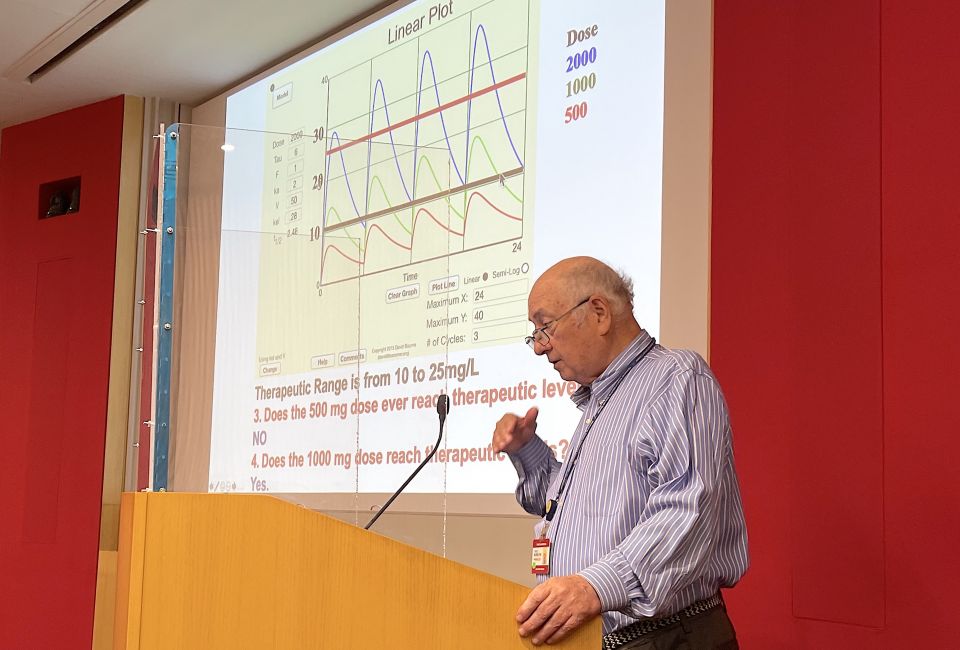
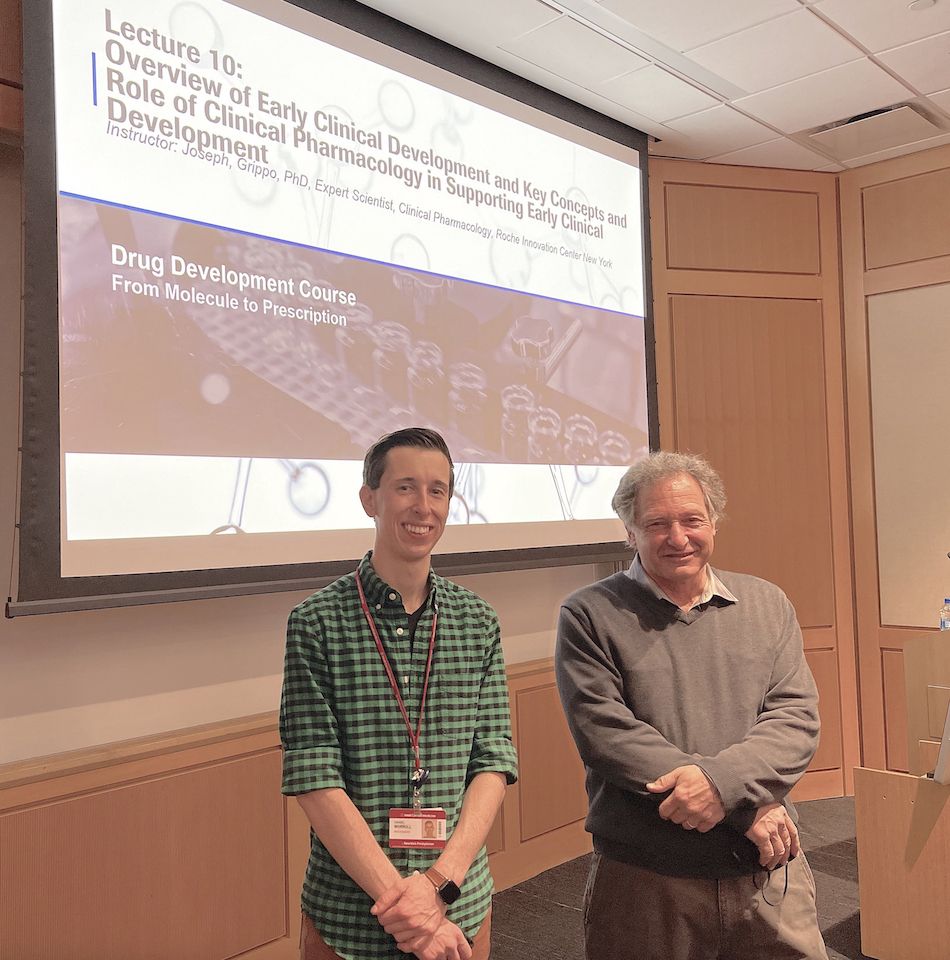
Drug Development Course: From Molecule to Prescription (Spring Qtrs I & II)
Dr. Jerry Varkey (directors), Drs. Gudas and Heller (course facilitators)
Quarters III and IV of the course cover in more depth T and B cell-mediated immunity and topics of clinical relevance, such as microbial immunity, allergy, autoimmunity, tumor immunology, congenital and acquired immunodeficiencies, transplantation immunology, and immunotherapy. All the topics are studied though lectures and in-depth review of selected articles. This course has been designed in collaboration with drug development experts from Roche and provides a foundation of integrated knowledge of the multi-disciplined process of developing a new medication. It includes real world challenges encountered in the areas of discovery, development, manufacturing, global regulatory approval and commercialization of new medicines. In addition, the impact of emerging technologies to healthcare and the development process will be considered. While each lecture could be a topic for one (or more) graduate course, the goal of this integrated program is to provide an introduction to the whole drug development process, to raise awareness of all the different aspects that need to be considered to bring new medicines to patients, and to elicit interest for young investigators. Click here for the 2024 Course Syllabus:  2024_drugdevcourse_final_schedule.pdf
Accelerating BioVenture Innovation (Fall Qtrs. I & II)
Course Directors & Contact: Loren Busby and Krista Fretes
Dr. Daniel Heller & Dr. Gross (Facilitators)
Accelerating BioVenture Innovation teaches basic financial analysis and principles of entrepreneurship. Lectures will cover the process of evaluating the market potential of a technology, building basic financial models, funding mechanisms, and writing and presenting a business plan to potential investors. Lectures are open to members of Cornell University, Memorial Sloan Kettering Cancer Institute, and Rockefeller University. We welcome leaders in the local NYC healthcare and biotechnology sector to participate. For the Syllabus, please contact Loren Busby or Krista Fretes.
Fundamentals of Academic Business Development (Qtrs. I - IV)
Dr. Lisa Placanica, Dr. Jamie Brisbois, Dr. Randi Silver (Facilitators)
The Fundamentals of Academic Business Development course and training program is organized and sponsored by the Weill Cornell Medicine Center for Technology Licensing (CTL@WCM), part of Weill Cornell Medicine Enterprise Innovation. Through the course, participants will gain hands-on experience in academic technology transfer and business development, divided into three modules: (i) Intellectual Property Protection, (ii) Technology Evaluation, and (iii) Partnering Academic Technologies. In each module, participants will apply the teachings to actual Weill Cornell Medicine inventions, helping cultivate the next generation of innovative life science technologies. In Module I, participants will learn about academic intellectual property (IP) strategy and management and will prepare draft claim sets and perform a prior art search to inform institutional IP strategy. In Module II, participants will learn about the intake process for academic invention disclosures and will perform preliminary market research assessments of recent invention disclosures to inform institutional investment decisions. In Module III, participants will learn how to market academic technologies and will prepare a complete marketing package for an academic technology. The course will culminate with pitch deck presentations and a mock negotiation exercise to provide insight into the deal-making process. Please contact Jamie Brisbois for Syllabus and Prerequisites.
All newly created PDFs on this website are accessible. For accessible versions of archival PDFs, please contact us.
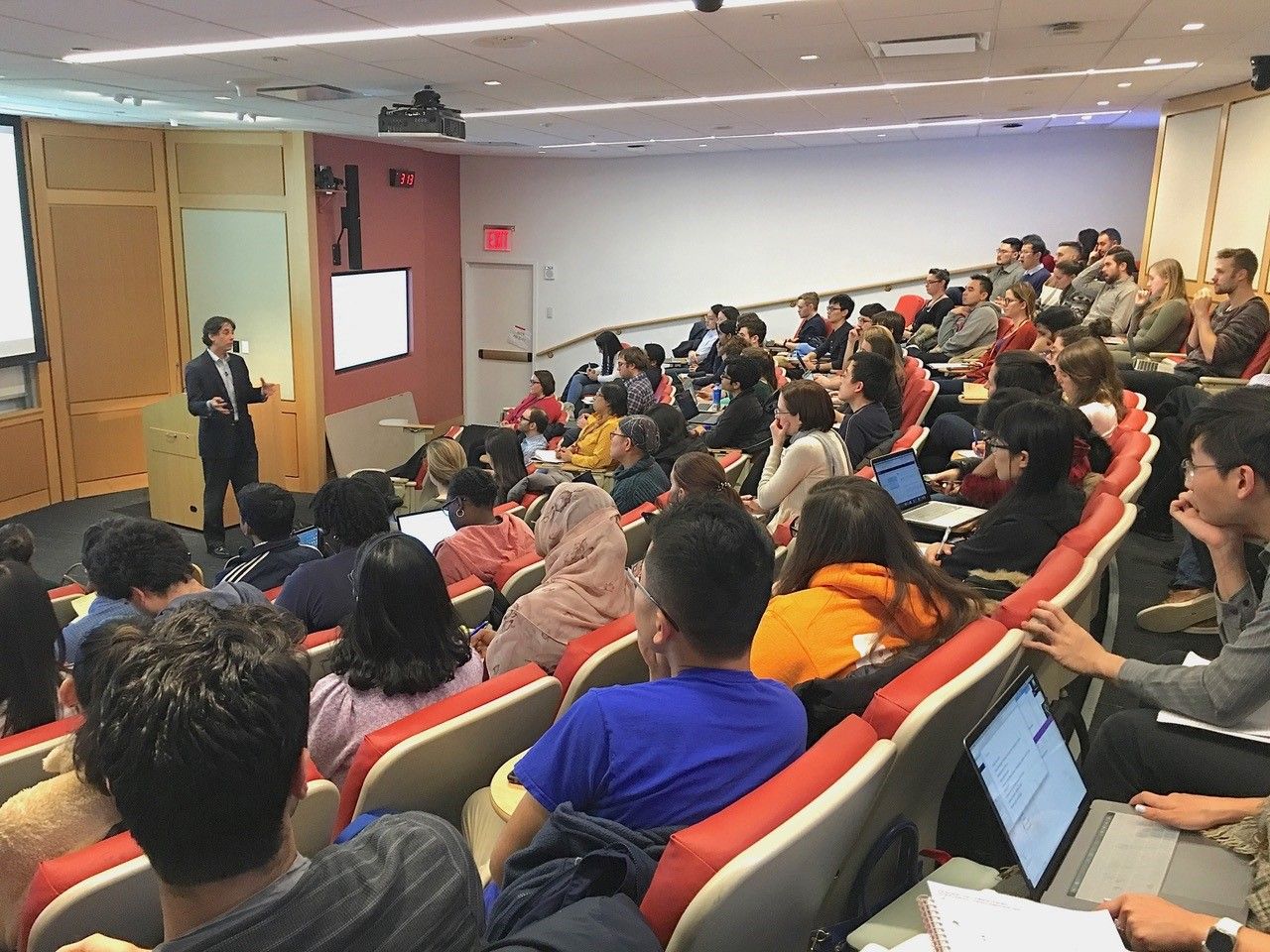
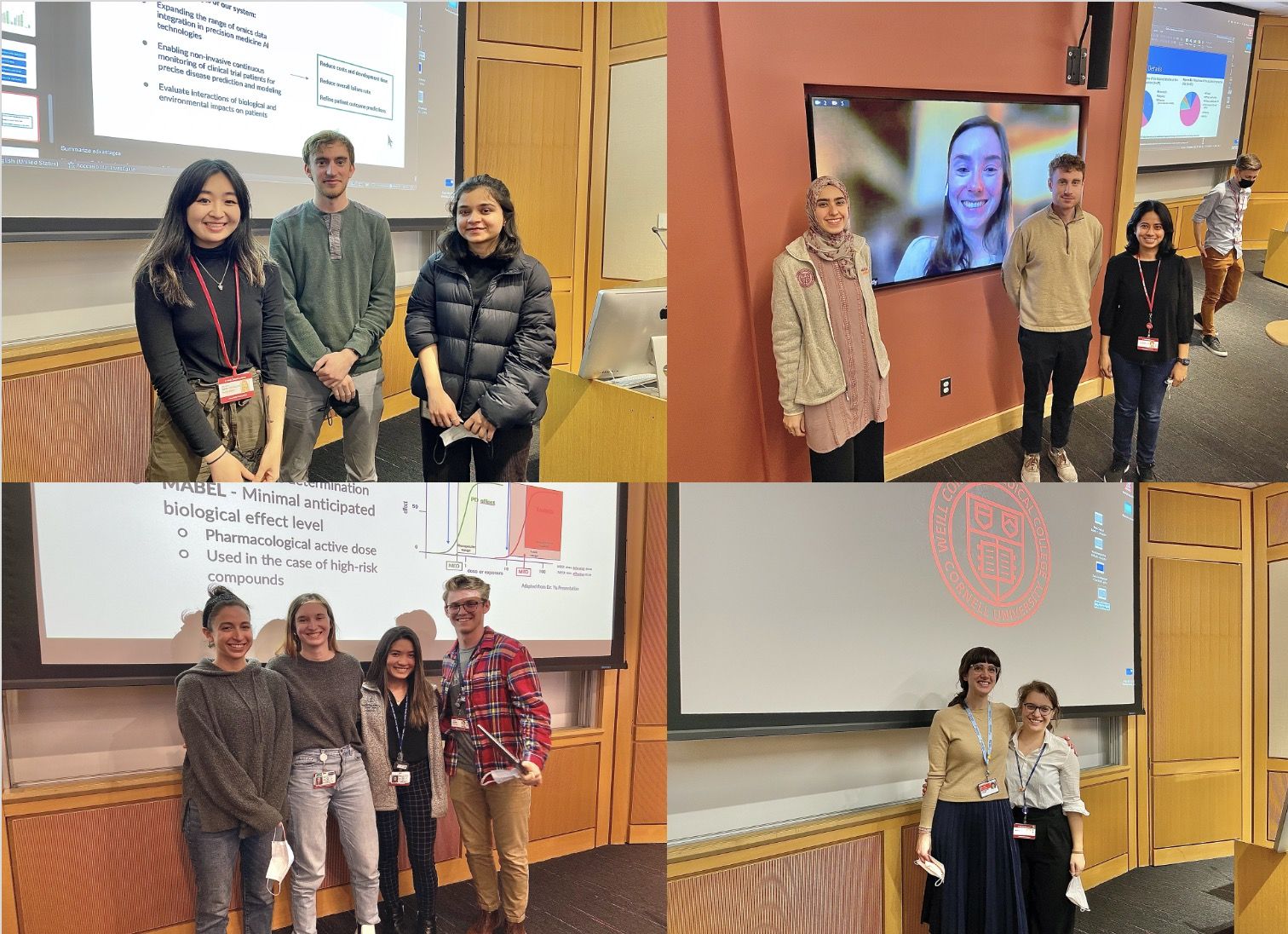
Dr. Ignacio Rodriguez lectures in the Drug Development course listed above, (Jan., 2020)
Additional Courses
Students may take additional courses chosen from any of the courses offered by the Graduate School.
The Graduate School also has an Inter-University Registration with CUNY. Please use the following URL to contact the Registrar's office regarding graduate courses that may apply: CUNY Courses Contact
If you are interested in registering for any of the CUNY courses please contact the graduate school registrar directly.
Journal Club and Research Symposium
In addition to coursework, students are required to participate in a bi-weekly, student-run Pharmacology Journal Club and the annual Vincent DuVigneaud Research Symposium, held every May. During the period of thesis research, students continue to register for and participate in the Pharmacology Seminar Series and attend all Pharmacology Program seminars, including the WMC Department of Pharmacology Seminar Series and the SKI Molecular Pharmacology & Chemistry Seminar Series. Students are also required to attend the Pharmacology Program retreat, usually held int he spring of each year.